
0
My Cart
£0.00
No products in the cart.
Active filters




- -10%
- -10%
In the Footsteps of Darwin: Correspondence
£14.39
£15.99
Free Shipping
England, 1856: Charles Darwin finishes writing On the Origin of Species while you are on your way home. Your correspondence with the illustrious scientist during your journey has paid off as his book will soon be published - but you\'re not done yet. In the In the Footsteps of Darwin: Correspondence expansion, you will gain the support of historical figures and make fascinating new discoveries thanks to several new features for the base game: publication tokens, classification tokens, envelope tokens, and new characters such as Emma Darwin and Queen Victoria.
Availability:
Last items in stock

- -20%
- -20%
Days And Nights: Red Army Miniature Pack
£28.76
£35.95
Free Shipping
Days & Nights: Red Army Pack is an add-on pack that contains 28 miniatures compatible with both Days of Ire and Nights of Fire. It also contains a small deck expansion to Nights of Fire, and an additional deck allowing campaign play.
In Campaign mode you can play a game of Days of Ire followed by a game of Nights of Fire (solo, cooperative, or conflict mode up to 1v2 supported), and have the winner decided only at the end!
Availability:
Out of Stock

- -20%
- -20%
Days Of Ire: Budapest 1956
£34.36
£42.95
Free Shipping
It\'s 1956, and waves of protest in Poland are once again showing cracks of the Eastern European communist bloc. Emboldened by these signs, students and intellectuals in Budapest, the Hungarian capital, organize a protest of previously unseen magnitudes. As the communist leadership sweeps in to kill the movement in its tracks a violent response is provoked, thus sparking the Revolution of the 23rd of October.
Availability:
Out of Stock
- -19%
- -19%
Art Society
£32.36
£39.95
Free Shipping
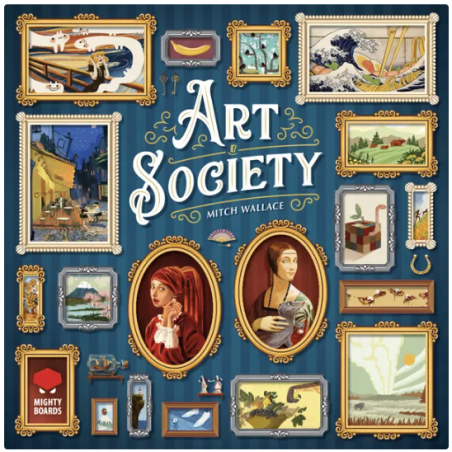
Art Society is a brand new art collection game with easy to learn rules for 2 to 4 players! The game is coming to retail in November.
In Art Society, you are an art connoisseur trying to impress your peers by putting together the most fashionable art collection of them all!
Availability:
Out of Stock
- -7%
- -7%
In the Footsteps of Darwin
£32.50
£34.95
Free Shipping
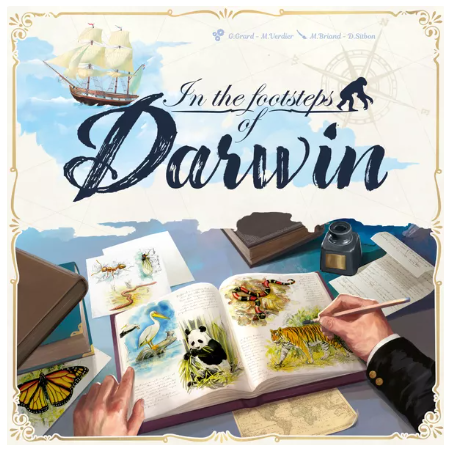
Twenty years after his expedition around the world, Charles Darwin is writing On the Origins of Species. He wants to gather new information about animal life, particularly about continents he hardly explored. Who other than young naturalists, eager for discovery, could help the renowned scholar finish writing his most famous work?
Availability:
Out of Stock