
0
My Cart
£0.00
No products in the cart.
Active filters



- -10%
- -10%
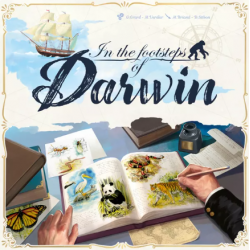
In the Footsteps of Darwin: Correspondence
£14.39
£15.99
Free Shipping
England, 1856: Charles Darwin finishes writing On the Origin of Species while you are on your way home. Your correspondence with the illustrious scientist during your journey has paid off as his book will soon be published - but you\'re not done yet. In the In the Footsteps of Darwin: Correspondence expansion, you will gain the support of historical figures and make fascinating new discoveries thanks to several new features for the base game: publication tokens, classification tokens, envelope tokens, and new characters such as Emma Darwin and Queen Victoria.
Availability:
Last items in stock

- -33%
- -33%
Beyond the Horizon
£40.17
£59.95
Free Shipping
Beyond the Horizon is a civilization game in which players compete to become the most influential society in history through exploration and expansion, development and production, research and technological advancement.
The game is played over a variable number of rounds until enough goals have been achieved to signal the end of the game. Along the way, players will earn points for exploring new lands, settling and building new cities, advancing technologically, and increasing their cultural and economic development. The player with the most points at the end of the game wins.
Availability:
In stock

- -20%
- -20%
Undergrove
£39.96
£49.95
Free Shipping
For over 300 million years, trees have traded nutrients with fungi in a vast underground network. Scientists continue to make new discoveries about this hidden world.
In Undergrove, you are a towering evergreen with an ancient symbiotic connection to the fungi in your forest. As new mushrooms appear, your options expand for converting nutrients and helping your seedlings. Using cube conversion, tile placement, area control, and a tiny bit of engine building, you’ll need to claim the most advantageous locations and optimize your actions to leave the best legacy in the forest. The player with the greatest number of successful seedlings, wins!
Availability:
In stock

- -20%
- -20%
Civolution
£69.99
£87.49
Free Shipping
Hello, student beings! The cosmic faculty of the Technical Academy of Creation is delighted to welcome you to your Civolution, the final exam in Civilization Design!
For this occasion, we prepared a humanoid scenario on an isolated continent. Here, each of you holds the rank of a local deity which is closely linked to its very own civilization and must lead it to success over the other civilizations. Your developmental possibilities are endless and reach from cultural and technical progress to evolutional adaptations. For example, what would you consider more beneficial to your tribes: inventing the wheel or growing wings? Demonstrate your ability to operate your civilization console and show us how well you can adjust to changeable environmental conditions and mild creational chaos.
Availability:
Last items in stock
- -40%
- -40%
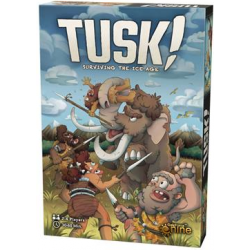
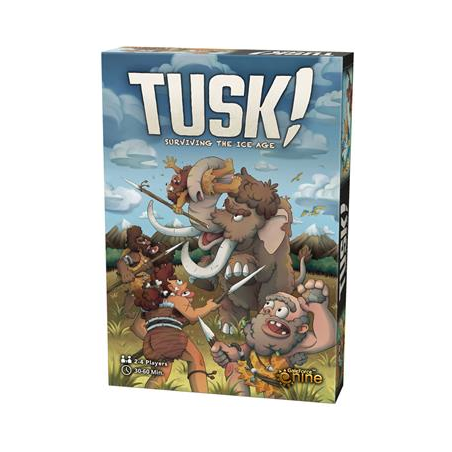
Tusk!: Surviving the Ice Age
£23.97
£39.95
Free Shipping
It\'s a race against time as the Ice Age approaches. You will need strength and food to survive and lots of it. The mammoth offers your tribes food beyond your wildest dreams, but they are powerful beasts.
Availability:
In stock
- -23%
- -23%
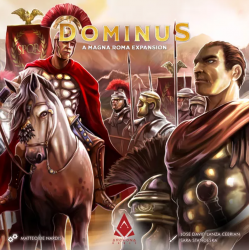
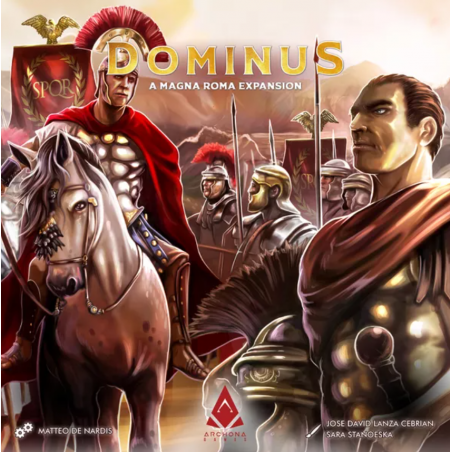
Magna Roma: Dominus
£29.99
£38.95
Free Shipping
In Dominus, players will be fighting for control of the Europe and North African territories. To do this, players will be able to either use the military symbols combination or the prestige symbol combination.
Availability:
In stock
- -23%
- -23%
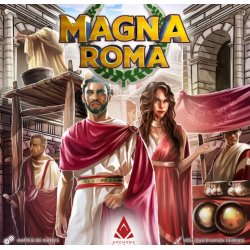
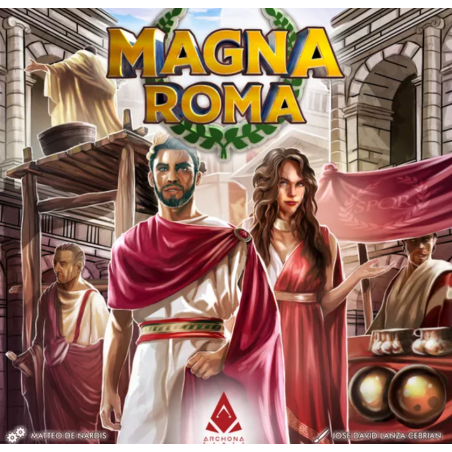
Magna Roma
£58.48
£75.95
Free Shipping
You are summoned by the Roman emperor to hear about his great plans for expansion. He wants you to found the next great Roman city that will bring glory to the Roman Empire! Build the greatest Roman cities and bring glory to Rome in this tile-placement, city builder board game for 1-4 players!
Availability:
In stock
- -5%
- -5%
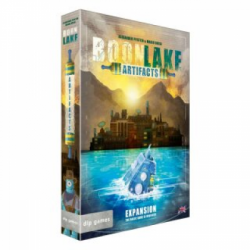
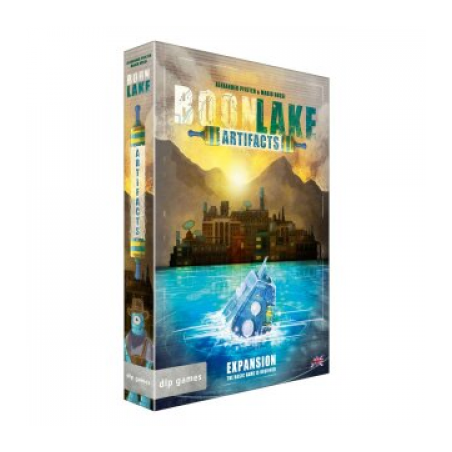
Boonlake: Artifacts
£28.45
£29.95
Free Shipping
In Boonlake: Artifacts, you send out your treasure hunters to find treasures and mysterious artifacts on a new map.
Have you always wondered about the vases scattered around Boonlake? Recent findings show that they are loaded to the brim with variable atomic system energy, or V.A.S.E. for short. Put your found vases into the new artifacts and secure an advantage toward victory.
Availability:
Out of Stock
- -7%
- -7%
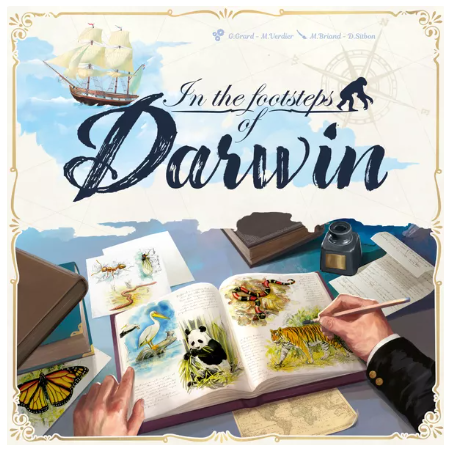
In the Footsteps of Darwin
£32.50
£34.95
Free Shipping
Twenty years after his expedition around the world, Charles Darwin is writing On the Origins of Species. He wants to gather new information about animal life, particularly about continents he hardly explored. Who other than young naturalists, eager for discovery, could help the renowned scholar finish writing his most famous work?
Availability:
Out of Stock