
0
My Cart
£0.00
No products in the cart.
Active filters




- -10%
- -10%
In the Footsteps of Darwin: Correspondence
£14.39
£15.99
Free Shipping
England, 1856: Charles Darwin finishes writing On the Origin of Species while you are on your way home. Your correspondence with the illustrious scientist during your journey has paid off as his book will soon be published - but you\'re not done yet. In the In the Footsteps of Darwin: Correspondence expansion, you will gain the support of historical figures and make fascinating new discoveries thanks to several new features for the base game: publication tokens, classification tokens, envelope tokens, and new characters such as Emma Darwin and Queen Victoria.
Availability:
Last items in stock

- -15%
- -15%
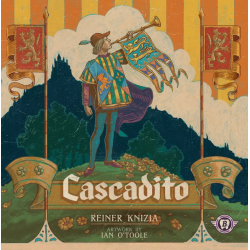
Cascadito
£15.26
£17.95
Free Shipping
The kingdom is reuniting, but the work of El Cascadero and his ministers has only begun. Many challenges and opportunities await the kingdom. Bandits threaten to overwhelm the towns, rivers present new modes of travel, trade continues to grow, and the borders must be defended.
Availability:
In stock

- -15%
- -15%
Cascadero
£40.76
£47.95
Free Shipping
The kingdom is shattered, its towns are divided, and its people are distrusting. The newly crowned ruler, El Cascadero, seeks to reunite the land, but he can’t do it alone. Thus, he appoints four ministers to visit the people and restore civil harmony. While the ministers are obligated to bring prosperity to the entire land, each of them also has one dedicated responsibility: Farming, Crafting, Mining, and Markets. El Cascadero also records in his book the successes of his ministers…
Availability:
In stock

- -40%
- -40%
Principi di Firenze - Edizione Limitata Numerata 2017
£41.97
£69.95
Free Shipping
Players attract artists and scholars trying to become the most prestigious family in Florence. Each player is given a palace grid and reference chart and attempts to gain the most victory points after seven rounds. Scoring victory points can be done in a variety of ways although most will be earned by playing profession cards to generate work points.
Availability:
In stock
- -7%
- -7%
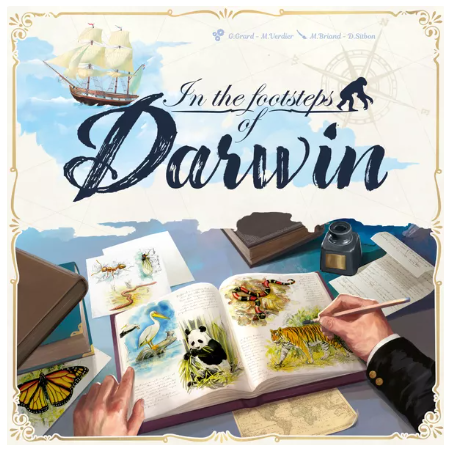
In the Footsteps of Darwin
£32.50
£34.95
Free Shipping
Twenty years after his expedition around the world, Charles Darwin is writing On the Origins of Species. He wants to gather new information about animal life, particularly about continents he hardly explored. Who other than young naturalists, eager for discovery, could help the renowned scholar finish writing his most famous work?
Availability:
Out of Stock