
0
My Cart
£0.00
No products in the cart.
Active filters


- -10%
- -10%
In the Footsteps of Darwin: Correspondence
£14.39
£15.99
Free Shipping
England, 1856: Charles Darwin finishes writing On the Origin of Species while you are on your way home. Your correspondence with the illustrious scientist during your journey has paid off as his book will soon be published - but you\'re not done yet. In the In the Footsteps of Darwin: Correspondence expansion, you will gain the support of historical figures and make fascinating new discoveries thanks to several new features for the base game: publication tokens, classification tokens, envelope tokens, and new characters such as Emma Darwin and Queen Victoria.
Availability:
Last items in stock
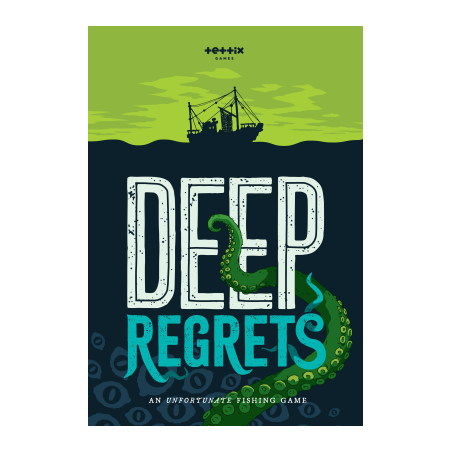
Deep Regrets
£49.95
Free Shipping
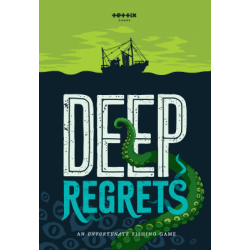
Deep Regrets is a game for 1-5 players that runs about 30 minutes per player.
An unfortunate fishing game about pulling progressively more horrifying things out of the ocean.
Decide what to eat, what to sell, what to mount, and how many regrets you\'re willing to carry, as you push yourself too far and spiral towards a thrilling conclusion in this strategic horror fishing game.
You\'ll roll bespoke tackle dice at the start of each turn to determine your strength for that round and then decide whether you\'ll stay at sea or return to port to sell fish, buy provisions, and recharge your energy.
Availability:
In stock
- -20%
- -20%
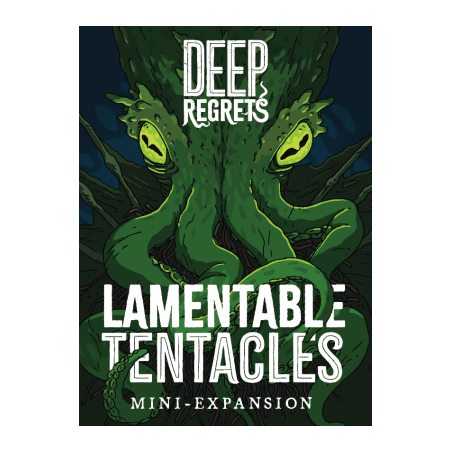
Deep Regrets: Lamentable Tentacles Mini Expansion
£3.16
£3.95
Free Shipping
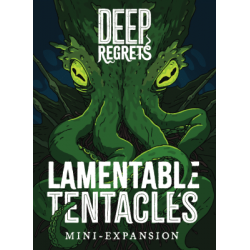
18 additional fish cards to add to the base game, all featuring far too many tentacles and everybody\'s favorite great old one. Compatible with solo mode!
Availability:
In stock
- -50%
- -50%
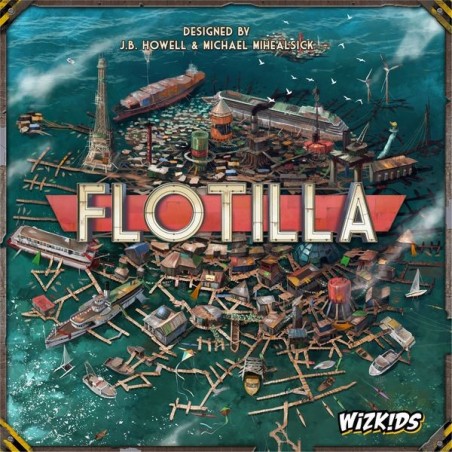
Flotilla
£37.48
£74.95
Free Shipping
Flotilla
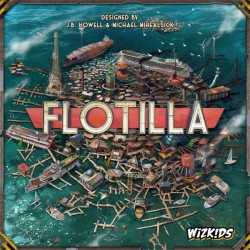
In 1954, with an explosion over a hundred thousand times more powerful than even the wildest estimates, the Castle Bravo nuclear test obliterated the Bikini Atoll, and ruptured the Earth down to its mantle.
As water levels rose in the aftermath, the remnants of humanity fled their homes and took to the sea. World leadership came together to build a massive Flotilla, mankind’s last bastion of civilization.
Availability:
Last items in stock
- -7%
- -7%
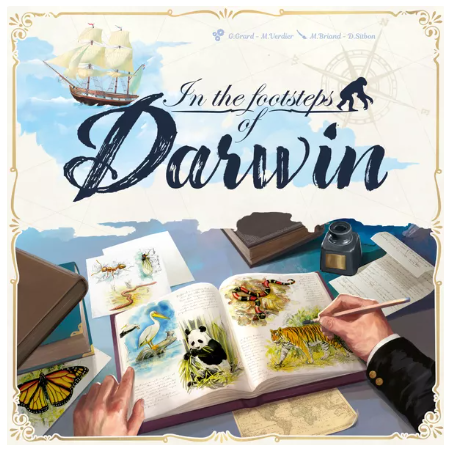
In the Footsteps of Darwin
£32.50
£34.95
Free Shipping
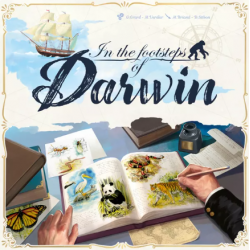
Twenty years after his expedition around the world, Charles Darwin is writing On the Origins of Species. He wants to gather new information about animal life, particularly about continents he hardly explored. Who other than young naturalists, eager for discovery, could help the renowned scholar finish writing his most famous work?
Availability:
Out of Stock