
0
My Cart
£0.00
No products in the cart.
Active filters


![[DAMAGED] Three Sisters](https://kienda.co.uk/6328-home_default/three-sisters.jpg)

- -10%
- -10%
In the Footsteps of Darwin: Correspondence
£14.39
£15.99
Free Shipping
England, 1856: Charles Darwin finishes writing On the Origin of Species while you are on your way home. Your correspondence with the illustrious scientist during your journey has paid off as his book will soon be published - but you\'re not done yet. In the In the Footsteps of Darwin: Correspondence expansion, you will gain the support of historical figures and make fascinating new discoveries thanks to several new features for the base game: publication tokens, classification tokens, envelope tokens, and new characters such as Emma Darwin and Queen Victoria.
Availability:
Last items in stock

- -33%
- -33%
Beyond the Horizon
£40.17
£59.95
Free Shipping
Beyond the Horizon is a civilization game in which players compete to become the most influential society in history through exploration and expansion, development and production, research and technological advancement.
The game is played over a variable number of rounds until enough goals have been achieved to signal the end of the game. Along the way, players will earn points for exploring new lands, settling and building new cities, advancing technologically, and increasing their cultural and economic development. The player with the most points at the end of the game wins.
Availability:
In stock

- -10%
- -10%
Finca
£26.96
£29.95
Free Shipping
The players take the roles of Mallorcan farmers, who strive to harvest as many of the island‘s tropical fruits: figs, almonds, olives, oranges, grapes, and lemons, as possible. The players deliver their harvested fruits to the island communities, which have constantly changing requirements during the course of the game. For these deliveries, the players receive victory points. In the end, the player with the most victory points is the winner.
Availability:
In stock

- -19%
- -19%
Windmill Valley
£46.53
£57.45
Free Shipping
It’s the late 19th century, and more than 9000 windmills dot the landscape of the Netherlands, some of them purpose-built to dry the lowlands, called polders. In the polders between these windmills are fields filled with colorful tulips—the flower that once was a part of the turbulent history of the first financial bubble but is now simply a quintessential part of the Dutch landscape, especially on the famous Bloemen Route (or “Flower Route”).
Availability:
In stock
- -16%
- -16%
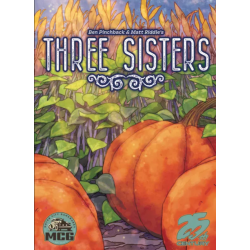
Three Sisters
£25.16
£29.95
Free Shipping
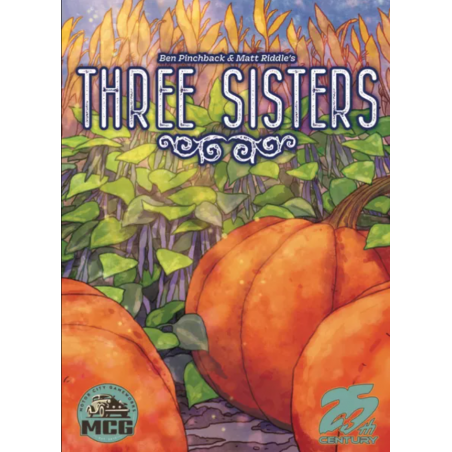
Three Sisters is a strategic roll-and-write game about backyard farming. Three Sisters is named after an indigenous agricultural technique still widely used today in which three different crops — in this case, pumpkins, corn, and beans — are planted close together. Corn provides a lattice for beans to climb, the beans bring nitrogen from the air into the soil, and the squash provides a natural mulch ground cover to reduce weeds and keep pests away.
Availability:
Last items in stock
- -15%
- -15%
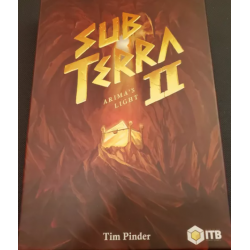
Sub Terra II: Arima's Light Expansion
£29.71
£34.95
Free Shipping
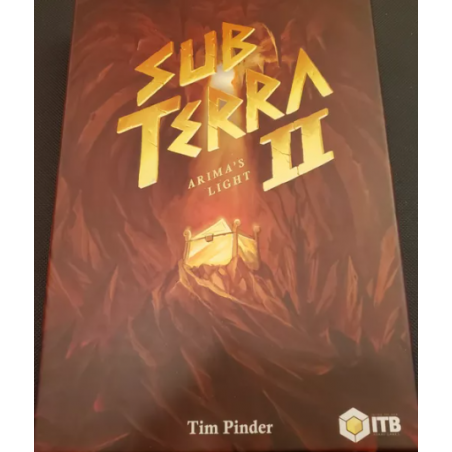
The Arima\'s Light expansion for Sub Terra II introduces 5 new characters for explorers to play as, the Magician, the Escape Artist, the Fortune Teller, the Strongman, and the Beastmaster (who also comes with a hound!). Along with these new unusual and intriguing characters Arima\'s light introduces a \'prequel\' game mode where an original cast of characters attempt to lock away the evil magic of Typhaon, the volcanic spirit.
Availability:
In stock
- -40%
- -40%
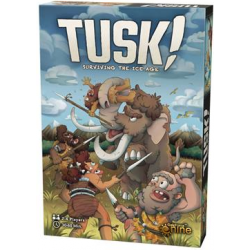
Tusk!: Surviving the Ice Age
£23.97
£39.95
Free Shipping
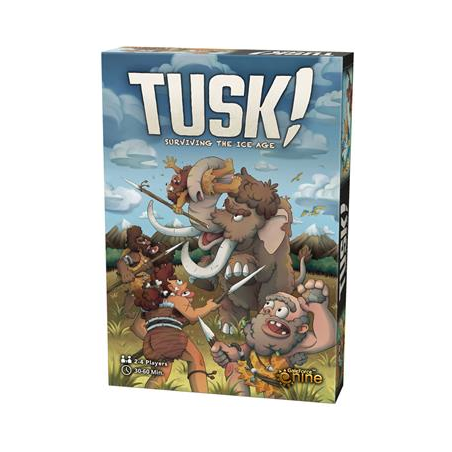
It\'s a race against time as the Ice Age approaches. You will need strength and food to survive and lots of it. The mammoth offers your tribes food beyond your wildest dreams, but they are powerful beasts.
Availability:
In stock
- -12%
- -12%
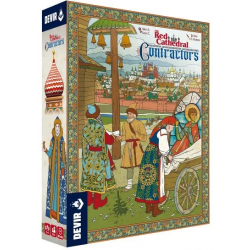
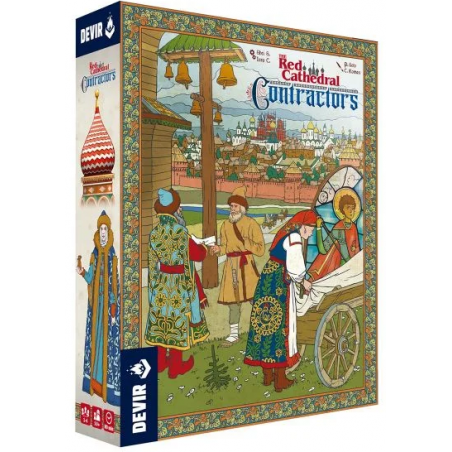
The Red Cathedral: Contractors
£26.36
£29.95
Free Shipping
Red Cathedral Contractors is another fabulous offering from Sheila Santos and Israel Cedrero, with stunning artwork again by Pedro Soto and Chema Roman.
Availability:
In stock
- -27%
- -27%
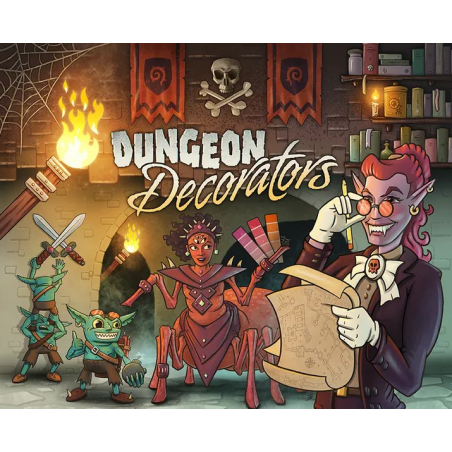
Dungeon Decorators
£31.35
£42.95
Free Shipping
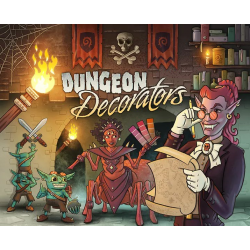
From time beyond memory, a great evil overlord has plagued the land, his ruthless cruelty matched only by his ruthlessly poor decorating taste. That evil overlord has died, and numerous pretenders are vying to take over his throne. And everyone knows that the first step on the journey to becoming a legendary evil boss is to set up a nefarious lair.
Availability:
In stock
![[DAMAGED] Three Sisters](https://kienda.co.uk/6328-medium_default/three-sisters.jpg)
- -25%
- -25%
[DAMAGED] Three Sisters
£22.46
£29.95
Free Shipping
This is a damaged product. Please note that this product has some minor damage and/or defects on the outer box.
Damage type: 1 - Lid torn
Three Sisters is a strategic roll-and-write game about backyard farming. Three Sisters is named after an indigenous agricultural technique still widely used today in which three different crops — in this case, pumpkins, corn, and beans — are planted close together. Corn provides a lattice for beans to climb, the beans bring nitrogen from the air into the soil, and the squash provides a natural mulch ground cover to reduce weeds and keep pests away.
Availability:
Out of Stock